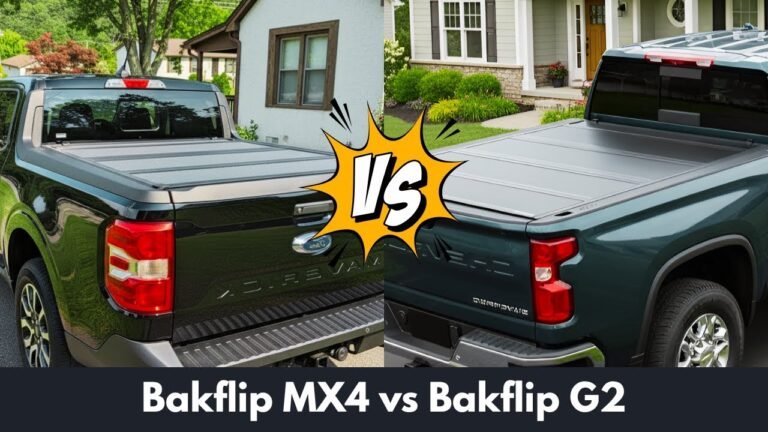
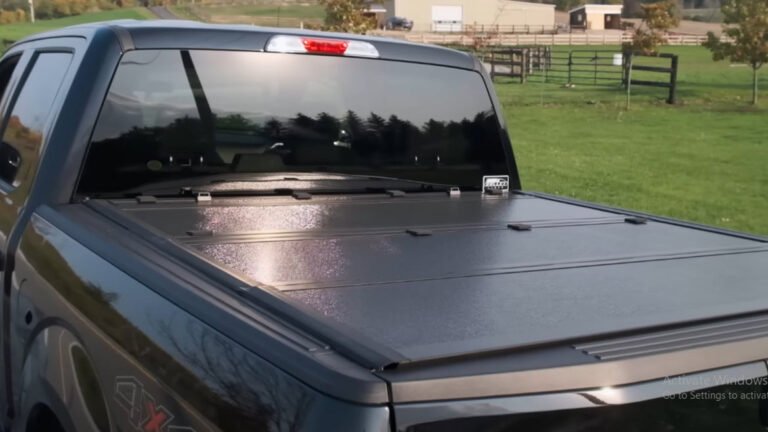
BAKFlip vs Undercover | Complete Tonneau Cover Comparison
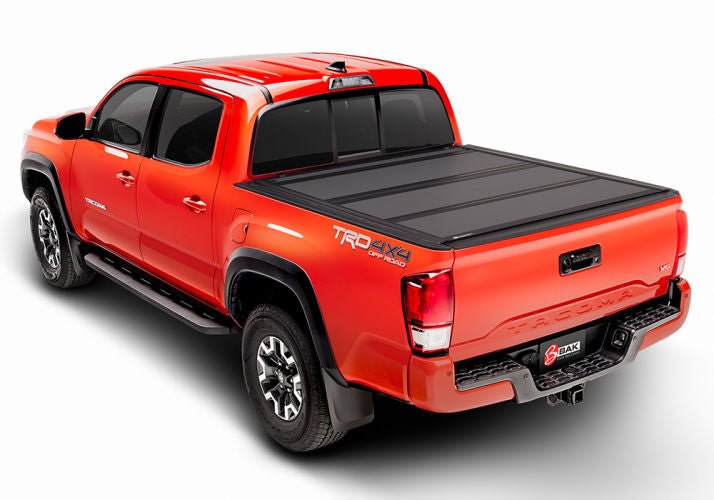
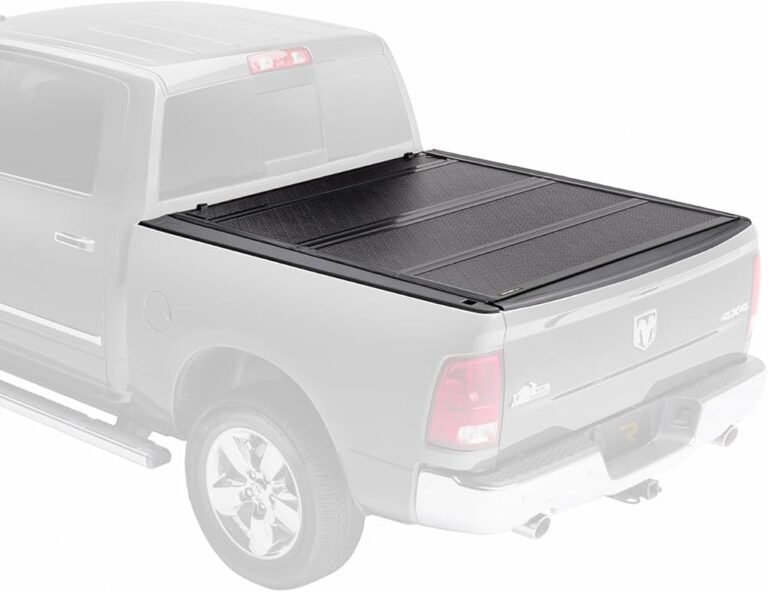
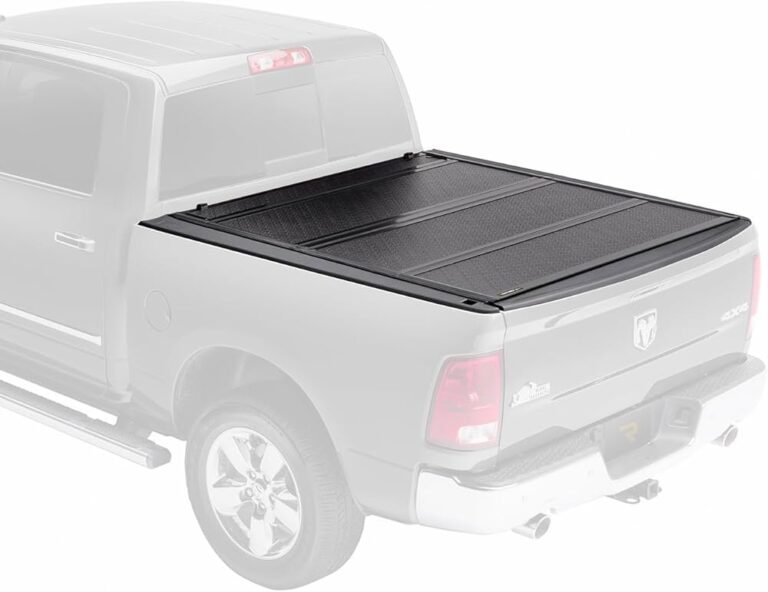
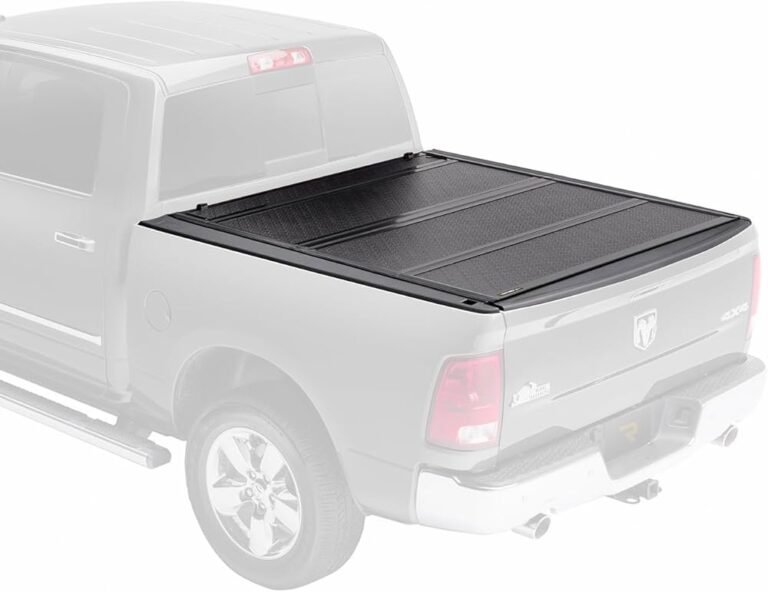
BAKFlip MX4 Aluminum Folding Cover
The BAKFlip MX4 represents premium aluminum construction with powder-coated finish that resists dents, scratches, and UV fading. Four-panel folding design provides complete bed access when opened, partial access for tall cargo, and weatherproof sealing when closed. Patented dual-action tailgate operation works with panels up or down. No-drill installation fits most F-150, Silverado, RAM 1500, and Toyota Tundra models with factory stake holes. Five-year limited warranty covers materials and workmanship. Weight rating supports 400 pounds evenly distributed across panels for cargo or snow loading.
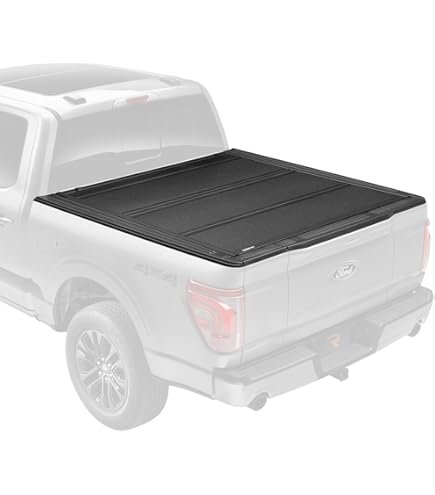
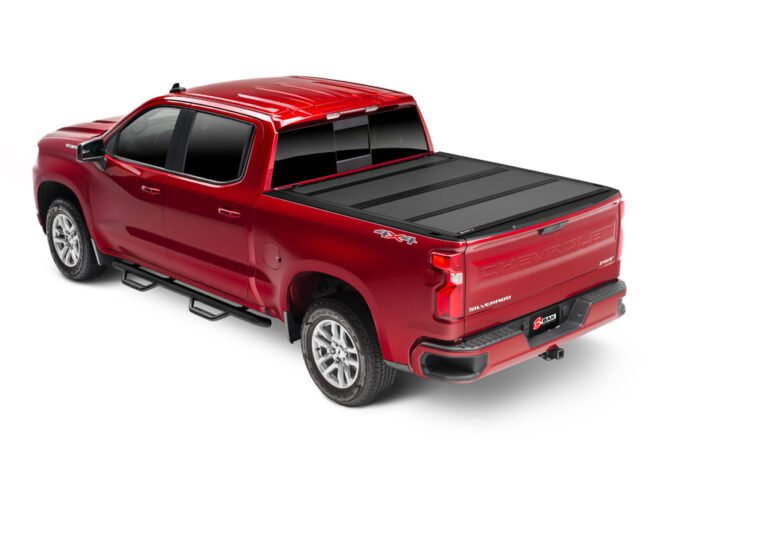
Undercover ArmorFlex Hard Folding Cover
The Undercover ArmorFlex features Line-X spray-on coating over FRP composite panels for maximum durability and chemical resistance. Three-panel design reduces complexity while maintaining full bed access capabilities. Integrated LED lighting system illuminates bed area during night operations. Automatic latching with slam-latch technology secures panels without manual engagement. Compatible with most pickup models including Ford, Chevy, GMC, and Dodge applications. Five-year finish warranty protects against fading, cracking, and coating defects. Supports 300 pounds distributed loading with reinforced hinge construction.
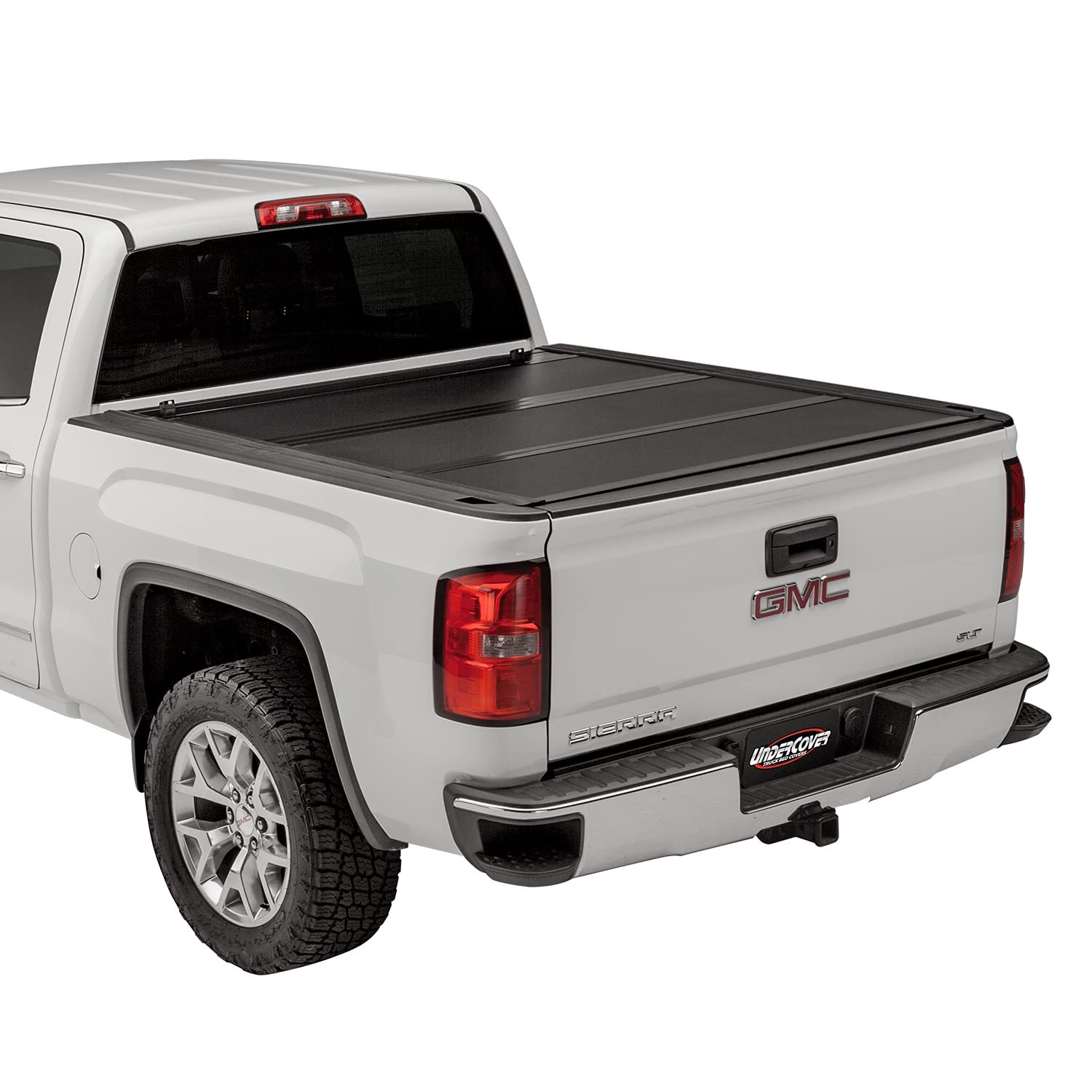
Undercover Ultra Flex Folding System
Undercover’s Ultra Flex combines lightweight design with heavy-duty performance through advanced composite construction. Textured matte finish resists fingerprints and maintains professional appearance. Dual-cylinder gas struts assist panel lifting for effortless operation. Weather sealing system uses EPDM rubber gaskets with integrated drainage channels. Quick-release hardware allows complete cover removal in under five minutes without tools. Lifetime structural warranty demonstrates manufacturer confidence in durability. Compatible with most bed liner systems and toolbox configurations through adjustable mounting hardware.
Construction Materials: BAKFlip vs Undercover Analysis
The fundamental difference between BAKFlip vs Undercover tonneau covers starts with construction materials that determine long-term durability, weight capacity, and weather resistance. BAKFlip exclusively uses marine-grade aluminum with powder-coated finish, while Undercover employs various composite materials including fiberglass-reinforced plastic and advanced polymer systems.
BAKFlip’s aluminum construction provides superior dent resistance and maintains structural integrity through extreme temperature cycling. The powder-coated finish bonds chemically to aluminum for exceptional chip and fade resistance. Aluminum naturally resists corrosion without special coatings, making BAKFlip covers ideal for coastal environments where salt air attacks lesser materials.
Undercover’s composite approach offers different advantages. Their FRP panels weigh less than aluminum while providing excellent impact resistance. The spray-on Line-X coating creates a textured surface that hides minor scratches and provides enhanced grip for cargo loading. However, composite materials can crack under severe impact where aluminum would dent and bend without structural failure.
Weight and Load Capacity Differences
When comparing BAKFlip vs Undercover weight ratings, aluminum construction typically supports higher loads. The BAKFlip MX4 handles 400 pounds evenly distributed, while most Undercover models support 300 pounds. This difference matters for truck owners who regularly load camping gear, construction materials, or recreational equipment on their closed covers.
However, the covers’ own weight affects fuel economy and handling. Undercover’s composite construction weighs 15-25% less than equivalent BAKFlip aluminum panels. For daily driving without cargo loading, lighter weight provides marginal fuel economy benefits and easier manual operation.
Consider your actual usage patterns when evaluating weight capacity. Most truck owners never approach maximum load ratings, making weather sealing and durability more important than theoretical weight limits. Both brands exceed typical real-world loading requirements for tools, camping gear, and everyday cargo.
Climate and Environment Considerations
Geographic location significantly influences the BAKFlip vs Undercover decision. BAKFlip aluminum naturally handles extreme temperatures without brittleness or expansion issues. From Minnesota winters to Arizona summers, aluminum maintains consistent performance and sealing characteristics.
Undercover composite materials show more temperature sensitivity in extreme climates. Cold weather can make composites brittle and prone to cracking from impact. Hot climates may cause expansion that affects panel alignment and sealing. However, Undercover’s advanced polymer formulations minimize these issues compared to basic fiberglass covers.
Salt exposure from coastal environments or winter road treatment favors BAKFlip’s corrosion resistance. Aluminum forms protective oxide coating naturally, while composite materials rely on surface coatings for protection. Damaged coatings expose composite substrates to moisture intrusion and degradation.
Weather Sealing Performance Comparison
Both manufacturers prioritize weather sealing, but their approaches differ significantly. BAKFlip vs Undercover sealing systems use different materials and methods to achieve water-tight closure under various conditions.
BAKFlip employs dual-seal technology with EPDM rubber gaskets along panel perimeters and specialized hinge seals between folding sections. The system creates multiple barriers against water intrusion with integrated drainage channels directing moisture away from cargo areas. Panel-to-rail sealing uses compression gaskets that maintain contact pressure across the full perimeter.
Undercover utilizes engineered weather-stripping with advanced polymer compounds that resist UV degradation and maintain flexibility through temperature extremes. Their sealing system includes integrated drainage channels and specialized corner treatments that eliminate common leak points where panels meet rails.
Real-World Water Resistance
Independent testing shows both BAKFlip and Undercover systems provide excellent water resistance under normal conditions. However, extreme weather events like driving rain with high winds can challenge any tonneau cover system. Neither brand claims absolute waterproof performance—they provide weather-resistant protection suitable for most conditions.
BAKFlip’s aluminum construction maintains consistent sealing pressure as panels don’t flex or distort under wind loads. The rigid structure ensures gaskets maintain proper compression for reliable sealing. Undercover’s composite panels may flex slightly under extreme wind, potentially allowing minor water intrusion during severe storms.
Both systems handle typical rainfall, car washes, and moderate weather excellently. For critical cargo protection, consider additional measures like waterproof containers regardless of cover brand choice.
Drainage System Design
Effective drainage prevents water accumulation that can overwhelm sealing systems. BAKFlip drainage channels integrate into aluminum rail extrusions with specific profiles that direct water away from cargo areas. The channels include debris guards preventing leaves and dirt from blocking drainage paths.
Undercover systems incorporate molded drainage channels within their mounting rails with smooth surfaces that resist debris accumulation. Some models include removable drain plugs for thorough cleaning and maintenance access.
Regular drainage maintenance improves both systems’ performance. Clear channels monthly in autumn when leaf debris accumulates. Use compressed air or small brushes to remove dirt buildup that can cause water backup and potential leaks.
Installation and Hardware Systems
Installation complexity and hardware quality represent crucial factors in the BAKFlip vs Undercover comparison. Both brands emphasize no-drill installation for trucks with factory stake holes, but their mounting systems use different approaches and materials.
BAKFlip utilizes heavy-duty aluminum rails with integrated clamp systems that distribute mounting loads across multiple contact points. The rail extrusions include specific profiles for gasket retention and drainage functionality. Stainless steel hardware resists corrosion while providing secure attachment that withstands highway speeds and wind loads.
Undercover employs composite rail systems designed to match their panel materials for thermal expansion compatibility. The mounting hardware includes corrosion-resistant fasteners with specialized coatings. Some models feature quick-release mechanisms allowing complete cover removal without tools for occasional full bed access.
Installation Time and Complexity
Most truck owners complete BAKFlip installation in 45-60 minutes using basic hand tools. The process involves positioning rails, adjusting clamps for proper fit, and mounting panels with pre-attached hinges. Detailed instructions include truck-specific measurements and torque specifications for optimal performance.
Undercover systems typically require 30-45 minutes for installation due to fewer components and simplified hardware. The composite rails often include integrated mounting points that simplify alignment and reduce adjustment requirements. However, some models require more precise positioning to achieve proper sealing and operation.
Professional installation ensures optimal performance for both brands but costs $150-300 depending on location and dealer. DIY installation saves money while providing valuable familiarity with your cover’s operation and maintenance requirements.
Hardware Durability and Maintenance
Long-term hardware performance affects both operation and total ownership costs. BAKFlip stainless steel fasteners resist corrosion indefinitely with minimal maintenance. The aluminum rails maintain structural integrity through decades of use, though gaskets and seals require periodic replacement.
Undercover hardware quality varies by model, with premium lines featuring stainless steel components comparable to BAKFlip systems. Entry-level models may use coated steel fasteners that require more maintenance in harsh environments. Composite rails generally prove durable but may require replacement if damaged by impact or extreme UV exposure.
Budget for hardware maintenance over your cover’s lifespan. Quality fasteners and mounting components last years with proper care, while cheaper alternatives may need replacement within 2-3 years in challenging climates.
Panel Design and Folding Mechanisms
The panel configuration significantly impacts daily usability in the BAKFlip vs Undercover comparison. BAKFlip predominantly uses four-panel designs, while Undercover offers both three and four-panel configurations depending on the specific model.
BAKFlip’s four-panel system provides maximum flexibility for cargo loading. You can open one section for small items, fold back two panels for medium cargo, or completely fold the cover forward for full bed access. The panel proportions accommodate common cargo sizes while maintaining structural strength and weather sealing.
Undercover’s three-panel designs reduce complexity and potential failure points while still providing excellent versatility. Larger individual panels may handle wind loads better, but the system offers fewer partial-opening configurations. Four-panel Undercover models compete directly with BAKFlip systems in terms of flexibility and convenience.
Hinge Construction and Longevity
Hinge quality determines long-term reliability since these components experience constant stress during operation. BAKFlip aluminum hinges integrate with panel construction for maximum strength while maintaining weather sealing between sections. Stainless steel pins and bushings resist wear through thousands of operating cycles.
Undercover hinge systems vary by model but generally use reinforced composite construction with stainless steel hardware. The integrated approach reduces potential leak points while providing smooth operation. However, impact damage to composite hinges typically requires panel replacement rather than simple hardware repair.
Regular hinge lubrication extends service life for both systems. Apply silicone spray every three months to maintain smooth operation and prevent premature wear. Avoid petroleum-based lubricants that can degrade rubber seals and gaskets.
Wind Resistance and Highway Performance
High-speed stability matters for daily driving and long-distance travel. BAKFlip aluminum panels provide exceptional rigidity that resists wind flutter and maintains aerodynamic efficiency. The structural strength prevents panel distortion that could compromise sealing or create annoying vibrations.
Undercover composite panels may show slight flexibility at highway speeds, particularly in crosswinds or when following large vehicles. However, properly designed systems include reinforcement ribs and structural elements that minimize flex while maintaining lighter weight benefits.
Both systems handle normal highway driving excellently. For frequent high-speed travel or extreme wind conditions, aluminum rigidity provides advantages in stability and long-term durability.
Security Features and Locking Mechanisms
Cargo security represents a critical consideration in tonneau cover selection. The BAKFlip vs Undercover security comparison reveals different approaches to protecting valuable truck bed contents from theft and unauthorized access.
BAKFlip systems use automatic latching mechanisms that engage when panels close, providing passive security without requiring manual operation. The aluminum construction resists cutting and prying attempts better than softer materials. Advanced models include keyed locking systems that secure the cover in closed position.
Undercover covers feature various security options depending on model selection. Slam-latch technology automatically secures panels when closed, while premium models include integrated locking mechanisms with weather-resistant key cylinders. The composite construction provides reasonable security against casual theft attempts.
Tailgate Integration and Access
Tailgate operation with tonneau covers installed varies significantly between brands and models. BAKFlip patented dual-action tailgate design allows normal tailgate operation whether panels are open or closed. This feature provides convenient access without manipulating the cover for quick cargo loading.
Most Undercover models require specific panel positioning for tailgate operation, though some premium lines offer enhanced integration. The three-panel designs often provide better tailgate compatibility than four-panel systems due to larger rear panel sections.
Consider your typical cargo loading patterns when evaluating tailgate integration. Frequent small-item loading benefits from seamless tailgate operation, while occasional large cargo loading makes panel configuration more important than tailgate convenience.
Keyed Locking Systems
Available locking upgrades enhance security for valuable cargo storage. BAKFlip locking systems integrate with existing latch mechanisms to provide keyed security without compromising weather sealing or operation convenience. The locks resist common bypass techniques while maintaining ease of use for legitimate access.
Undercover locking options vary by model, with some featuring integrated locks from factory installation. Premium models include multiple lock points for enhanced security, while entry-level models may offer locks as optional accessories.
Remember that tonneau covers provide deterrent security rather than vault-level protection. They discourage casual theft and hide valuable items from view, but determined thieves can defeat any cover system. Don’t leave extremely valuable items in truck beds regardless of cover security features.
Price and Value Analysis
Understanding the total cost of ownership helps make informed decisions in the BAKFlip vs Undercover price comparison. Initial purchase prices represent only part of long-term expenses that include installation, maintenance, potential repairs, and replacement parts availability.
BAKFlip covers typically command premium pricing reflecting their aluminum construction and extensive engineering. Expect to pay $800-1,400 for most models depending on truck application and feature content. The higher initial cost often proves justified through superior durability, longer service life, and better resale value retention.
Undercover pricing varies widely by model and feature content, ranging from $600-1,200 for most applications. Entry-level composite covers provide excellent value for budget-conscious buyers, while premium models with advanced features compete directly with BAKFlip pricing.
Long-Term Value Considerations
Calculating cost per year of service reveals the true value proposition. A $1,200 BAKFlip cover lasting 10 years costs $120 annually, while an $800 cover needing replacement after six years costs $133 per year. Factor in potential repair costs, replacement parts availability, and warranty coverage for complete analysis.
BAKFlip’s aluminum construction typically requires fewer repairs and replacements over its service life. Replacement parts remain available for older models, and the robust construction handles minor impacts without damage. These factors contribute to lower total ownership costs despite higher initial investment.
Undercover value depends heavily on model selection and usage conditions. Premium composite models provide excellent durability approaching aluminum performance, while entry-level options may require more frequent replacement in demanding applications.
Warranty Coverage Comparison
Both manufacturers offer substantial warranty coverage, but terms and coverage details differ. BAKFlip provides five-year limited warranty covering materials and workmanship defects. The coverage includes structural components, hardware, and finish protection against premature failure under normal use conditions.
Undercover warranty terms vary by model but typically include five-year structural warranty with finish protection. Some premium models feature lifetime structural warranty demonstrating manufacturer confidence in durability. Review specific warranty terms for your chosen model to understand coverage limitations and claim procedures.
Warranty coverage proves valuable for major component failures but doesn’t eliminate normal maintenance requirements. Both brands exclude wear items like seals and gaskets from warranty coverage, considering these normal maintenance components requiring periodic replacement.
Brand Reputation and Customer Support
Manufacturer reputation and after-sale support significantly impact long-term ownership satisfaction. The BAKFlip vs Undercover reputation comparison reveals both brands maintain solid industry standing with different strengths and focus areas.
BAK Industries established market leadership through consistent quality and innovation in aluminum folding covers. Their engineering focus and manufacturing quality control create products that typically exceed customer expectations for durability and performance. Customer service receives positive feedback for technical support and warranty claim handling.
Undercover built their reputation on innovative designs and competitive pricing across various market segments. Their diverse product line serves different customer needs from budget-conscious buyers to premium feature seekers. Customer support quality varies by dealer network, as Undercover relies more heavily on distributor support than direct customer service.
Parts Availability and Service Support
Long-term parts availability ensures your investment remains serviceable throughout its expected lifespan. BAKFlip maintains extensive parts inventory for current and discontinued models, recognizing that covers often outlast original trucks. Authorized dealers stock common replacement items while special orders typically ship within days.
Undercover parts availability varies by model age and dealer network strength. Current models receive excellent support, but older or discontinued models may face parts shortage challenges. The composite construction sometimes requires complete panel replacement rather than component repair, potentially increasing service costs.
Consider your local dealer network strength when choosing between brands. Strong local support improves service experience and may influence warranty claim handling. Contact potential dealers before purchase to assess their knowledge and service capabilities.
Installation and Technical Support
Both manufacturers provide comprehensive installation instructions with truck-specific details and troubleshooting guidance. BAKFlip instructions typically include more detailed torque specifications and adjustment procedures, while Undercover focuses on simplified installation processes.
Technical support quality affects problem resolution and customer satisfaction. BAKFlip customer service receives consistently positive feedback for knowledgeable staff and thorough problem-solving assistance. Undercover support varies by contact method and dealer involvement but generally provides adequate assistance for common issues.
Consider your mechanical comfort level when evaluating support needs. Experienced DIY mechanics may prefer detailed technical information, while novice installers benefit from simplified processes and responsive customer service.
Truck Compatibility and Fitment Options
Vehicle compatibility represents a crucial factor since tonneau covers require precise fitment for proper operation and weather sealing. The BAKFlip vs Undercover fitment comparison reveals different approaches to accommodating the diverse pickup truck market.
BAKFlip offers extensive truck model coverage including Ford F-150, Chevrolet Silverado 1500, RAM 1500, Toyota Tundra, Nissan Titan, and GMC Sierra applications. Their engineering team develops truck-specific mounting systems that accommodate factory variations and optional equipment. Most applications use no-drill installation with factory stake holes or mounting points.
Undercover provides comparable model coverage with specific focus on popular full-size pickup applications. Their composite construction allows some design flexibility that accommodates slight dimensional variations between model years. However, some applications may require drilling for optimal fitment and security.
Bed Length and Configuration Options
Both manufacturers offer covers for standard bed lengths including 5.5-foot, 6.5-foot, and 8-foot configurations common across major truck lines. BAKFlip typically provides more precise dimensional matching with truck-specific engineering, while Undercover may use common panel sizes across similar bed dimensions.
Crew cab and extended cab configurations receive full support from both brands, though specific mounting details may vary. Measure your truck bed carefully from inside bulkhead to inside tailgate for accurate fitment specification. Don’t assume bed length based on cab configuration since manufacturers offer various combinations.
Special applications like contractor models, fleet packages, or heavily modified trucks may require custom solutions. Contact manufacturers directly for fitment verification on unusual applications rather than assuming standard catalogs cover all variations.
Toolbox and Accessory Compatibility
Many truck owners require tonneau cover compatibility with existing bed accessories like toolboxes, bed liners, and tie-down systems. BAKFlip engineering accommodates most factory and aftermarket accessories through adjustable mounting systems and accessory-specific hardware kits.
Undercover compatibility varies by model and accessory combination. Gooseneck and fifth-wheel applications may require specific cover models or modifications for proper clearance and operation. Consult compatibility guides before purchase to avoid costly fitment issues.
Popular accessories like bed liners, tailgate assists, and cargo management systems typically integrate successfully with both brands. However, verify specific compatibility for your exact truck and accessory combination to prevent installation problems or operational conflicts.
Making Your BAKFlip vs Undercover Decision
Choosing between BAKFlip vs Undercover tonneau covers requires evaluating your specific needs, budget, and usage patterns against each brand’s strengths and limitations. Neither brand represents a universally superior choice—the best selection depends on individual priorities and circumstances.
Choose BAKFlip if you prioritize maximum durability, load capacity, and weather resistance. The aluminum construction excels in harsh environments, heavy-duty applications, and situations requiring long service life with minimal maintenance. BAKFlip suits truck owners who view their cover as a long-term investment requiring premium performance.
Select Undercover if you need competitive performance at lower cost or prefer specific features like integrated lighting or quick-release functionality. The composite construction provides excellent value for normal-duty applications while offering weight advantages and innovative design elements not available from BAKFlip.
Decision Matrix Framework
Rate the following factors by importance for your application: durability requirements, budget constraints, climate conditions, cargo types, security needs, and aesthetic preferences. Weight each factor according to your priorities and evaluate how each brand addresses your top concerns.
Consider your truck ownership timeline. If you typically keep trucks 3-4 years, initial cost may outweigh longevity benefits. Owners keeping trucks 7+ years benefit more from premium construction and extensive parts support that BAKFlip provides.
Evaluate your local dealer network for both brands. Strong local support can overcome minor product disadvantages through better service experience and warranty support. Weak local support may negate product advantages through poor installation or service difficulties.
Test and Evaluation Opportunities
Many dealers maintain display models or demonstration units allowing hands-on evaluation before purchase. Test panel operation, assess build quality, and examine weather sealing details. These direct comparisons reveal differences that specifications don’t capture.
Connect with other truck owners through forums, social media, and local clubs for real-world experiences with both brands. Owner feedback provides valuable insights into long-term performance, common problems, and satisfaction levels that influence your decision.
Consider attending truck shows or automotive events where both manufacturers display their products. Side-by-side comparisons highlight construction differences and allow direct questioning of manufacturer representatives about specific applications and concerns.
Frequently Asked Questions
Which lasts longer, BAKFlip vs Undercover tonneau covers?
BAKFlip aluminum construction typically provides longer service life with many covers exceeding 10 years of reliable operation. Undercover composite models generally last 6-8 years depending on climate and usage conditions. The aluminum’s superior resistance to impact, UV damage, and temperature cycling contributes to extended durability.
Can I install BAKFlip or Undercover covers myself?
Both brands design their covers for DIY installation using basic hand tools. BAKFlip typically requires 45-60 minutes, while Undercover installation averages 30-45 minutes. Most applications use no-drill installation, though some trucks may require drilling for optimal security and fitment.
How do weather sealing capabilities compare between brands?
Both BAKFlip and Undercover provide excellent weather resistance for normal conditions. BAKFlip’s rigid aluminum construction maintains consistent sealing pressure, while Undercover uses advanced weather-stripping compounds. Neither brand claims completely waterproof performance, but both handle typical rainfall and car washes effectively.
Which brand offers better security features?
BAKFlip automatic latching and aluminum construction provide superior security against theft attempts. The rigid panels resist cutting and prying better than composite materials. Undercover offers comparable latching systems with some models featuring integrated locks, but the composite construction offers less physical security.
Are replacement parts readily available for both brands?
BAKFlip maintains extensive parts inventory for current and discontinued models with excellent availability through authorized dealers. Undercover parts support varies by model age and dealer network strength. Both brands stock common wear items, but BAKFlip typically provides better long-term parts availability.
How do load capacities compare between BAKFlip and Undercover?
BAKFlip aluminum covers typically support 300-400 pounds evenly distributed, while Undercover composite models handle 200-300 pounds depending on construction. The aluminum’s superior structural strength provides advantages for heavy cargo loading, though most users never approach maximum ratings.
Which brand provides better value for money?
Value depends on usage requirements and ownership timeline. BAKFlip provides better long-term value for heavy-duty applications and extended ownership through superior durability. Undercover offers excellent initial value for normal-duty use and shorter ownership periods. Calculate cost per year of expected service for accurate comparison.
Do both brands work with truck bed accessories?
Both manufacturers accommodate most common bed accessories including toolboxes, bed liners, and cargo management systems. BAKFlip typically offers more extensive accessory compatibility through adjustable mounting systems. Verify specific compatibility for your exact truck and accessory combination before purchase.