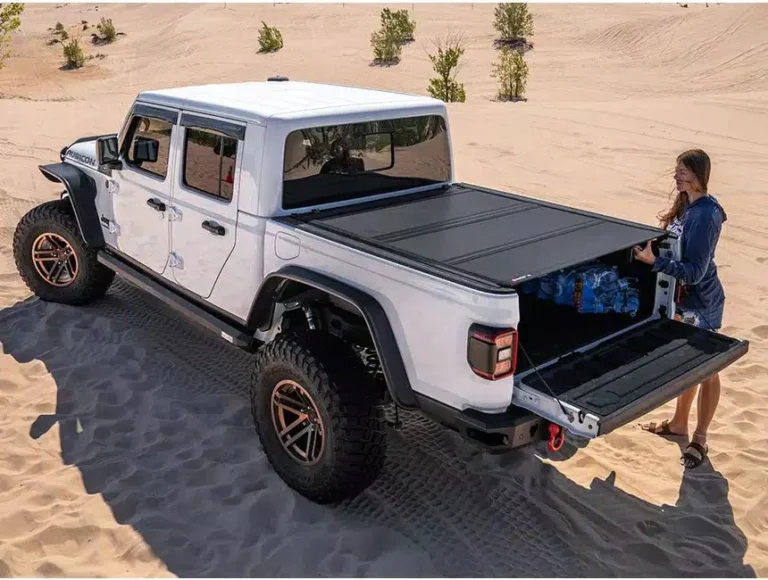
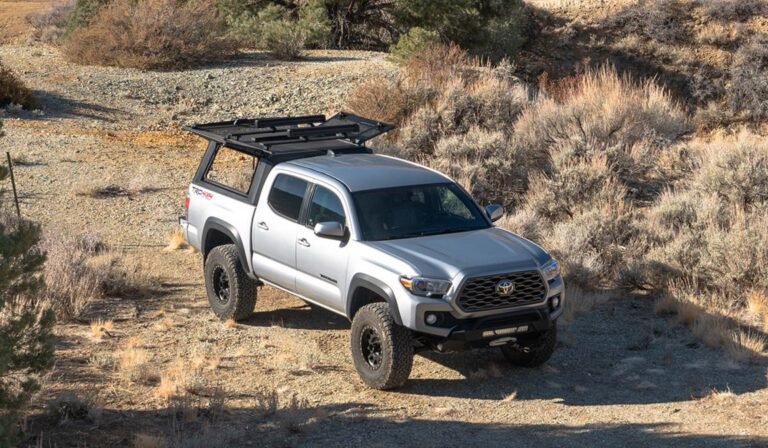
BAKFlip vs Peragon Tonneau Cover Comparison
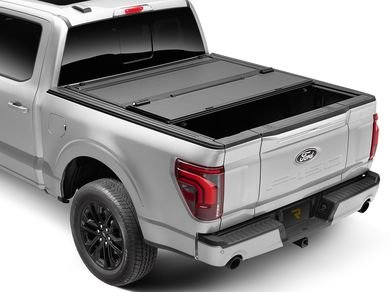
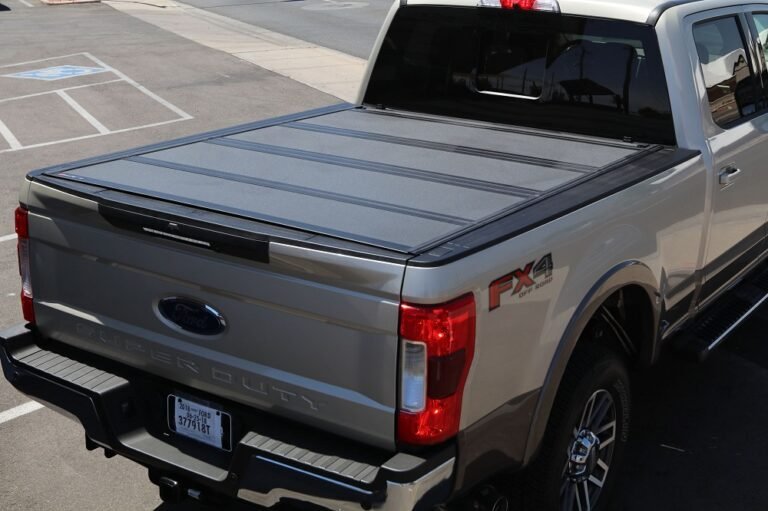
BAKFlip MX4 Folding Tonneau Cover
The BAKFlip MX4 represents premium aluminum tonneau cover engineering with dual-action tailgate compatibility and industry-leading weather sealing. Features extruded aluminum panels with matte finish that resists scratches and fading. No-drill installation on most F-150, Silverado, and RAM models using precision-engineered clamp system. Five-year warranty covers materials and workmanship. Supports up to 300 pounds of evenly distributed cargo when closed. Three-panel folding design allows partial or full bed access without complete cover removal.
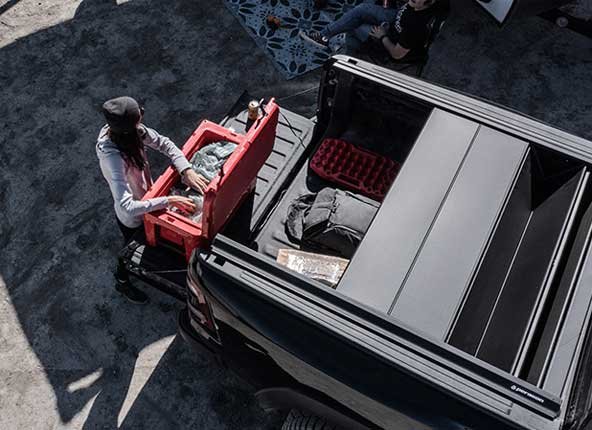
Peragon Retractable Aluminum Cover
The Peragon retractable system uses interlocking aluminum slats that slide forward into a canister housing. Premium powder-coated finish available in multiple colors to match truck paint. Automatic locking mechanism secures cover in any position along bed length. Low-profile design maintains truck aerodynamics while providing complete weatherproof sealing. Lifetime structural warranty demonstrates manufacturer confidence in long-term durability. Compatible with most full-size pickup trucks including Tundra, F-150, and Silverado models.
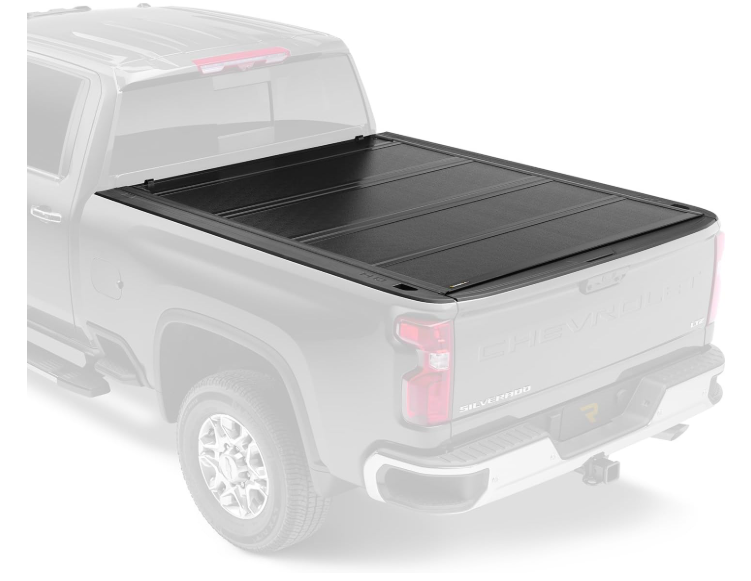
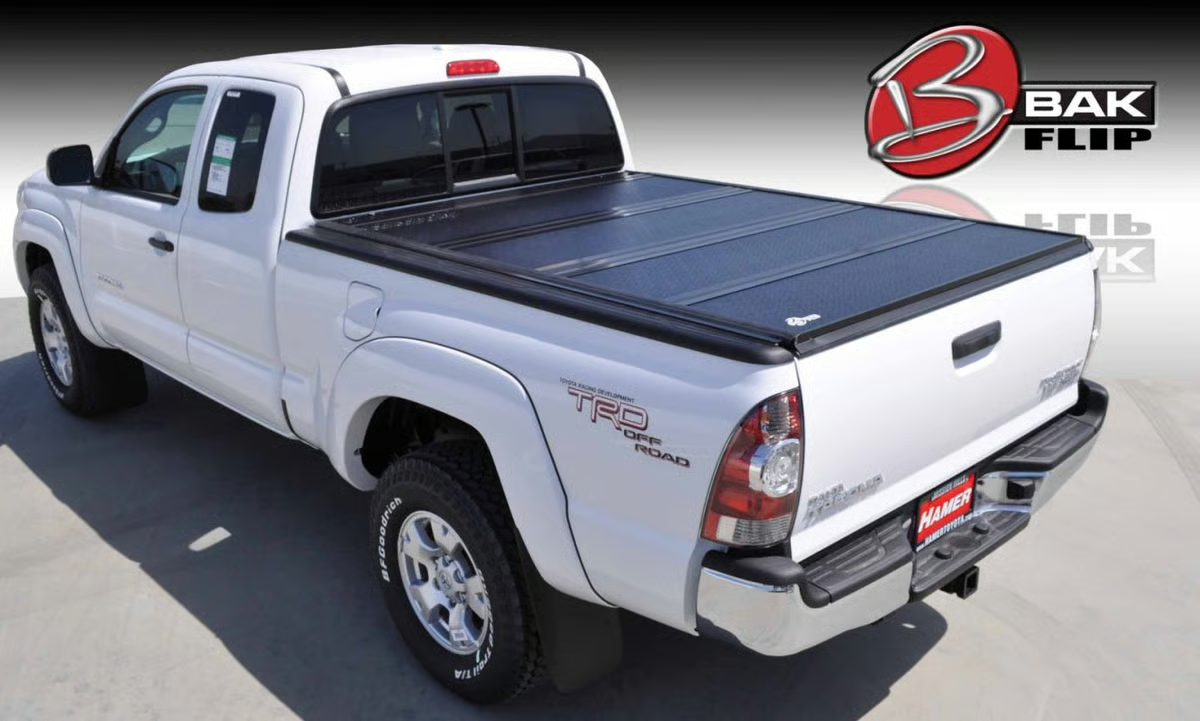
BAKFlip G2 Hard Folding Cover
The BAKFlip G2 provides entry-level access to BAK Industries’ folding technology with simplified three-panel design. Aluminum construction with textured finish hides minor scratches and maintains appearance through years of use. Manual latching system offers reliable security with simple operation. Budget-friendly pricing makes professional-grade tonneau cover accessible to more truck owners. Supports 300 pounds when closed and folds completely against cab for full bed access. Three-year warranty covers manufacturing defects and premature failures under normal use conditions.
BAKFlip vs Peragon: Construction and Design Philosophy
When comparing BAKFlip vs Peragon tonneau covers, the fundamental difference lies in their operational design and engineering approach. BAKFlip specializes in folding aluminum panels that stack against the truck cab, while Peragon focuses on retractable slat systems that slide into housing canisters. Both brands commit to premium aluminum construction, but their execution creates distinctly different user experiences.
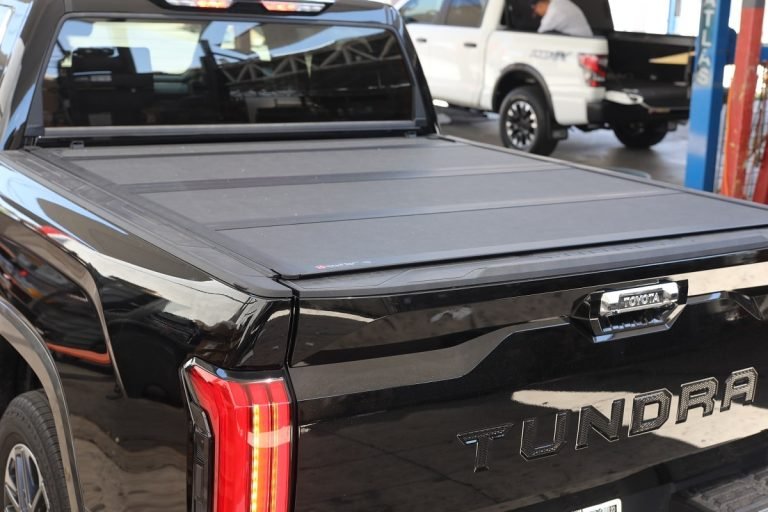
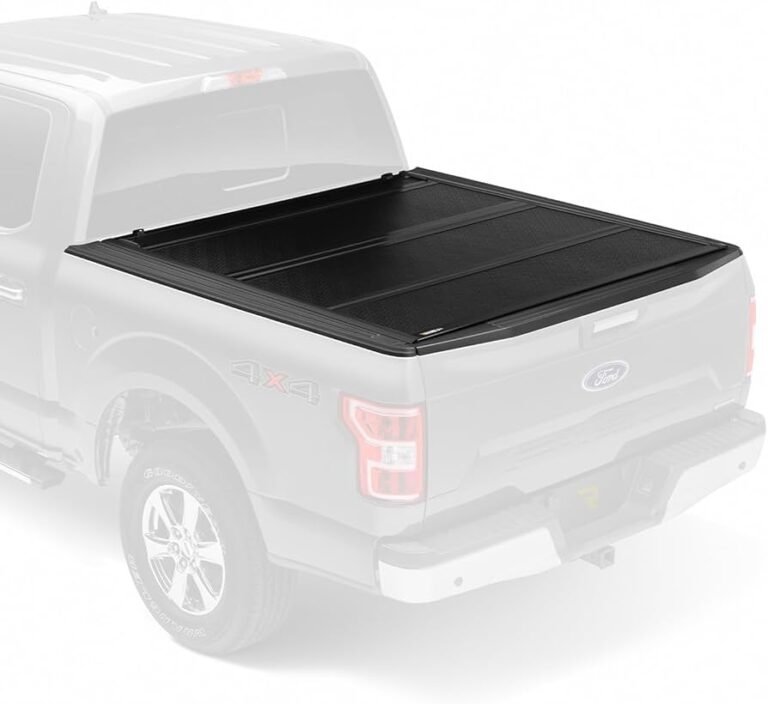
BAKFlip covers use extruded aluminum panels connected by heavy-duty hinges that allow folding in multiple configurations. This design enables partial bed access by folding specific sections while keeping others closed. The three or four-panel configuration provides versatility for different cargo loading scenarios. Each panel maintains structural integrity independently, so damage to one section doesn’t compromise the entire system.
Peragon’s retractable design employs interlocking aluminum slats that slide along precision rails into a front-mounted canister. This creates an uninterrupted surface when closed and completely disappears when open. The continuous slat system provides excellent weather sealing but requires the entire cover to retract for bed access. Partial opening isn’t possible with the retractable design.
Both manufacturers prioritize aluminum construction over steel or vinyl alternatives for superior corrosion resistance, lighter weight, and professional appearance. However, their panel thickness, finishing processes, and reinforcement strategies differ significantly. BAKFlip uses thicker individual panels with foam core insulation, while Peragon employs thinner interlocking slats with structural strength through interconnection.
Material Quality and Durability
BAK Industries sources marine-grade aluminum for BAKFlip panels, ensuring corrosion resistance in harsh environments including coastal salt exposure and winter road treatments. The aluminum receives powder coating or anodizing depending on the model, with textured finishes that hide minor scratches and maintain appearance through years of use.
Peragon uses 6063-T5 aluminum alloy for slat construction—a material commonly used in architectural applications for its strength-to-weight ratio and corrosion resistance. The slats receive multi-stage powder coating available in several colors including black, silver, and custom paint-matched options. The coating process includes primer, base color, and protective clear coat for maximum durability.
Both brands engineer their mounting hardware from stainless steel to prevent corrosion at connection points. BAKFlip uses heavier clamps with rubber cushioning to distribute load and prevent paint damage. Peragon employs precision-machined brackets with adjustment capabilities for perfect alignment across different truck bed configurations.
Weather Sealing: BAKFlip vs Peragon Performance
Weather protection represents a critical differentiator when evaluating BAKFlip vs Peragon systems. Both brands achieve excellent sealing through different engineering approaches, but their real-world performance varies depending on climate conditions and maintenance practices.
BAKFlip covers use continuous EPDM rubber seals along all panel edges and perimeter contact points. The seals compress against truck bed rails and between panel joints to create weatherproof barriers. Multiple seal contact points provide redundancy—if one area develops minor leaks, other seals maintain protection. The folding design allows easy seal inspection and replacement when needed.
Peragon systems achieve sealing through precision manufacturing tolerances and interlocking slat design. Each slat features weatherstripping along its edges that compresses against adjacent slats when closed. The continuous surface eliminates the panel-to-panel gaps that challenge folding cover designs. However, the complex retractable mechanism creates more potential points for seal degradation over time.
Independent testing shows both systems provide excellent weather protection when properly maintained. BAKFlip covers demonstrate slightly better performance in extreme cold where rubber seals maintain flexibility. Peragon systems excel in dusty environments where the continuous surface provides superior particle exclusion.
| Weather Protection Feature | BAKFlip | Peragon |
|---|---|---|
| Seal Type | EPDM rubber perimeter and panel seals | Weatherstripping on interlocking slats |
| Water Resistance | Excellent with multiple seal barriers | Excellent through precision tolerances |
| Dust Protection | Very good with proper seal maintenance | Excellent with continuous surface |
| Cold Weather Performance | Excellent – flexible rubber seals | Good – some thermal expansion issues |
| Maintenance Requirements | Periodic seal lubrication | Track cleaning and adjustment |
Drainage System Design
Effective water management prevents pooling and ensures quick drying after rain or washing. BAKFlip systems incorporate drain channels molded into side rails that direct water away from the truck bed. These channels handle large volumes quickly but require periodic cleaning to prevent clogging from debris.
Peragon covers rely on precise manufacturing tolerances and slight slope angles to shed water without dedicated drainage channels. Water runs off the continuous surface naturally, but installation alignment becomes critical for proper water management. Misalignment can create low spots where water accumulates.
Both systems benefit from regular cleaning and inspection to maintain optimal weather protection. BAKFlip owners should clear drain channels and lubricate seals quarterly. Peragon owners need to keep retraction tracks clean and verify proper alignment periodically.
Installation and Compatibility Differences
Installation complexity and truck compatibility vary significantly between BAKFlip vs Peragon systems. These differences affect not only initial setup time but also long-term adjustability and potential issues with other truck accessories.
BAKFlip installation typically requires 60-90 minutes using basic hand tools and the included clamp system. Most applications require no drilling or permanent modifications to the truck bed. The clamps position along bed rails with rubber cushioning to prevent paint damage. Adjustment capabilities accommodate slight variations in bed rail dimensions across different truck models.
Peragon installation demands more precision and often requires 2-3 hours for proper setup. The retractable mechanism needs precise alignment for smooth operation, requiring careful measurement and adjustment during installation. Some applications may need drilling for mounting brackets, making the installation more permanent than BAKFlip systems.
Truck compatibility favors BAKFlip covers with applications available for virtually every full-size pickup including F-150, Silverado, RAM 1500, GMC Sierra, Toyota Tundra, and Nissan Titan models. Multiple bed lengths receive specific applications rather than universal-fit compromises. Model-year coverage extends back over a decade for most popular trucks.
Accessory Compatibility
Compatibility with other truck accessories often influences tonneau cover selection. BAKFlip covers work with most bed accessories including bed liners, toolboxes, and tie-down systems. The clamp system adjusts to accommodate spray-in bedliners or rubber mats without compatibility issues.
Peragon systems have more limited accessory compatibility due to the retractable mechanism’s precision requirements. Bed liners, stake pocket covers, and aftermarket tie-downs may interfere with slat operation or housing clearance. Always verify compatibility before purchasing additional bed accessories.
Both systems accommodate most OEM truck bed features including integrated tie-downs, cargo management systems, and bed lighting. However, aftermarket additions often require case-by-case compatibility verification, especially with Peragon’s more complex mechanical requirements.
Operation and Daily Use Experience
The BAKFlip vs Peragon user experience differs dramatically in daily operation, maintenance requirements, and long-term reliability. Understanding these differences helps match cover selection to individual usage patterns and preferences.
BAKFlip operation involves manual folding of individual panels using integrated handles. The system allows partial opening by folding specific sections while leaving others closed. This flexibility proves valuable when loading different cargo types or accessing specific bed areas. Panel folding requires minimal effort but does involve some physical interaction with the cover.
Peragon operation centers on smooth retraction using an integrated handle or optional electric motor. The cover slides effortlessly into its housing canister, completely disappearing from view. Operation feels more refined and effortless compared to manual panel folding. However, the cover must fully retract for any bed access—partial opening isn’t possible.
Both systems provide security benefits when closed, concealing cargo from view and providing lockable protection. BAKFlip uses twist latches or automatic buckles depending on the model. Peragon employs a locking mechanism that secures the cover in any position along its travel.
Cargo Loading Scenarios
Different cargo loading situations favor one system over the other. BAKFlip’s partial opening capability excels when loading long items that need support at the tailgate while keeping the front of the bed covered. Construction workers often benefit from accessing tools stored near the cab while keeping materials covered toward the tailgate.
Peragon’s complete retraction works better for full bed access scenarios like loading ATVs, furniture, or bulk materials. The cover completely disappears, providing unobstructed loading without panels potentially interfering with cargo placement. However, this means exposing the entire bed contents even for small item retrieval.
Consider your typical cargo loading patterns when choosing between systems. Frequent partial access favors BAKFlip, while occasional full-bed loading suits Peragon’s design better. Both systems handle normal cargo loads effectively, but their access patterns create distinct advantages for different use cases.
Pricing and Value Analysis
Cost considerations extend beyond initial purchase price when comparing BAKFlip vs Peragon value propositions. Installation costs, long-term maintenance, warranty coverage, and replacement part availability all affect total ownership costs.
BAKFlip pricing ranges from $800-1,500 depending on the model and features. The MX4 represents the premium option with dual-action tailgate compatibility and enhanced weather sealing. The G2 provides entry-level access to BAKFlip technology at lower cost. Installation typically adds $150-300 if performed professionally, though many owners complete DIY installation successfully.
Peragon pricing starts around $1,200 for manual operation and extends to $1,800+ for electric versions with advanced features. The higher base price reflects the more complex retractable mechanism and precision manufacturing requirements. Professional installation is strongly recommended, adding $200-400 to total cost depending on truck complexity.
Long-term value considerations favor BAKFlip systems for replacement part availability and serviceability. Individual panels, seals, and hardware components are readily available and reasonably priced. Most repairs can be completed by owners with basic mechanical skills, reducing long-term maintenance costs.
| Cost Factor | BAKFlip | Peragon |
|---|---|---|
| Entry-level Price | $800 (G2 model) | $1,200 (manual) |
| Premium Price | $1,500 (MX4) | $1,800+ (electric) |
| Installation Cost | $150-300 (DIY possible) | $200-400 (professional recommended) |
| Replacement Parts | Widely available, moderate cost | Limited availability, higher cost |
| Repair Complexity | User-serviceable most repairs | Professional service often required |
Warranty Coverage Comparison
BAKFlip warranties provide 3-5 years coverage depending on model, covering materials, workmanship, and manufacturing defects. The warranty includes structural components, sealing systems, and hardware. Wear items like seals have shorter coverage periods reflecting their consumable nature. BAK Industries has established warranty service through their dealer network.
Peragon offers lifetime structural warranty on the aluminum components and retraction mechanism. This demonstrates confidence in long-term durability but covers fewer components than BAKFlip’s comprehensive approach. Moving parts, seals, and electrical components have limited coverage periods.
Warranty claims typically process faster with BAKFlip due to wider dealer network and parts availability. Peragon’s more specialized system may require longer resolution times for complex mechanical issues requiring factory evaluation.
Climate and Environment Considerations
Environmental conditions significantly affect BAKFlip vs Peragon performance and longevity. Understanding how each system responds to specific climate challenges helps guide selection based on regional conditions.
Cold weather performance generally favors BAKFlip systems due to simpler mechanical operation and flexible rubber seals. Extreme cold can affect Peragon’s retraction mechanism if tracks accumulate ice or debris. BAKFlip panels fold manually regardless of temperature, though seals may stiffen in extreme cold.
Hot climates benefit both systems through aluminum construction that reflects heat rather than absorbing it like vinyl alternatives. However, Peragon’s continuous surface may provide slightly better heat reflection. Both systems maintain structural integrity through extreme temperature cycles.
Coastal environments with salt exposure test corrosion resistance over time. Both brands use marine-grade aluminum and stainless steel hardware designed for harsh conditions. However, Peragon’s more complex mechanism provides additional areas where salt can accumulate and cause problems. Regular washing becomes critical in coastal areas.
Dust and Debris Management
Dusty environments challenge both systems differently. BAKFlip covers shed most debris easily but can accumulate particles in panel joints and drain channels. Regular cleaning prevents buildup that could affect sealing performance. The folding design allows easy access for cleaning all areas.
Peragon systems provide superior dust exclusion when closed due to their continuous surface and precision tolerances. However, dust accumulation in retraction tracks can impair smooth operation. Track cleaning becomes essential maintenance in dusty conditions. The retracted position protects mechanisms but concentrates debris in the canister area.
Consider your typical driving environment when choosing between systems. Construction sites, agricultural areas, and desert regions may favor different solutions based on debris types and accumulation patterns.
Brand Support and Service Network
Long-term ownership satisfaction often depends more on manufacturer support quality than initial product features. BAKFlip and Peragon approach customer service and dealer networks differently, affecting parts availability, technical support, and warranty service.
BAK Industries maintains an extensive dealer network across North America with many locations stocking common replacement parts. Their customer service team provides technical support for installation questions and troubleshooting. Online resources include installation videos, parts diagrams, and maintenance guides. The company has operated for over two decades, establishing proven support infrastructure.
Peragon operates with a more limited dealer network focused on quality over quantity. Their dealers receive extensive training on the retractable system’s complexity. Customer service emphasizes professional installation and service to maintain optimal performance. Online resources include detailed installation guides and maintenance schedules.
Replacement part availability strongly favors BAKFlip with components available through multiple channels including Amazon, auto parts stores, and dealers. Common items like seals, corner caps, and hardware stock readily. Peragon parts typically require ordering through authorized dealers or direct from the manufacturer.
Technical Support Quality
BAKFlip technical support handles high call volumes efficiently with knowledgeable staff familiar with installation and troubleshooting across all models. They provide phone support during business hours and email support for less urgent questions. Many common issues have documented solutions readily available.
Peragon technical support provides more personalized service due to lower call volumes and product complexity. Their specialists often schedule extended calls to walk customers through complex adjustments or troubleshooting procedures. This higher-touch approach suits the product’s precision requirements but may result in longer response times.
Both companies maintain active online communities where owners share experiences, solutions, and modifications. These user forums often provide faster answers to common questions than official support channels.
Making the Right Choice: BAKFlip vs Peragon
Selecting between BAKFlip and Peragon tonneau covers requires matching system capabilities to your specific needs, budget, and usage patterns. Neither system is universally superior—each excels in different scenarios and appeals to different owner preferences.
Choose BAKFlip if you prioritize versatile access options, lower total cost of ownership, widespread service support, and proven long-term reliability. The folding design suits owners who frequently need partial bed access and prefer simple, robust operation. BAKFlip works better for contractors, recreational users, and anyone wanting hassle-free long-term ownership.
Choose Peragon if you value refined operation, complete bed access when open, premium appearance, and don’t mind higher costs for enhanced sophistication. The retractable design appeals to owners who prioritize smooth operation and complete bed access for occasional large cargo. Peragon suits luxury truck owners and those wanting cutting-edge tonneau cover technology.
Consider your typical cargo requirements carefully. Frequent partial access strongly favors BAKFlip’s flexibility. Occasional full-bed loading works better with Peragon’s complete retraction. Mixed usage patterns might favor BAKFlip’s versatility over Peragon’s specialization.
Budget Considerations
Total ownership costs extend well beyond purchase price. BAKFlip systems typically cost less initially and maintain that advantage through lower maintenance costs, readily available parts, and DIY serviceability. Professional installation is optional for most owners, reducing setup costs.
Peragon systems require higher initial investment but may provide better long-term value for owners who prioritize premium operation and appearance. Professional installation becomes nearly mandatory, increasing total setup costs. However, the lifetime structural warranty provides peace of mind for long-term owners.
Factor in your mechanical aptitude when considering long-term costs. BAKFlip’s serviceability benefits owners comfortable with basic maintenance. Peragon’s complexity may require professional service for optimal performance, increasing lifetime costs for mechanically inexperienced owners.
Regional and Climate Factors
Your geographic location influences system performance and maintenance requirements. Cold climates generally favor BAKFlip’s simpler operation and flexible seals. Hot, dusty environments may benefit from Peragon’s superior sealing when closed. Coastal areas with salt exposure challenge both systems but may favor BAKFlip’s easier cleaning access.
Consider local dealer support availability. BAKFlip’s wider network provides better support in rural areas and smaller cities. Peragon’s specialized dealers concentrate in major metropolitan areas. If professional service is important to you, verify local availability before purchasing.
Both systems perform well across diverse climates with proper maintenance. However, extreme conditions may favor one design over the other based on specific operational requirements and maintenance access.
Frequently Asked Questions
Which system provides better weather protection: BAKFlip vs Peragon?
Both systems provide excellent weather protection when properly maintained. BAKFlip uses multiple rubber seal barriers that provide redundancy if one area develops minor leaks. Peragon achieves sealing through precision manufacturing and interlocking slats that create a continuous surface. Independent testing shows comparable performance, with BAKFlip performing slightly better in extreme cold and Peragon excelling in dusty conditions.
Can I install either system myself or do I need professional installation?
BAKFlip installation is designed for DIY completion using basic hand tools and typically takes 60-90 minutes. The clamp system requires no drilling on most applications. Peragon installation demands more precision and often requires 2-3 hours with potential drilling needs. While DIY installation is possible, professional installation is strongly recommended for Peragon systems to ensure optimal operation.
Which system works better with other truck bed accessories?
BAKFlip covers offer better accessory compatibility due to their adjustable clamp system that accommodates bed liners, toolboxes, and tie-down systems. Peragon systems have more limited compatibility due to precision requirements for the retractable mechanism. Bed liners and aftermarket accessories may interfere with slat operation or housing clearance.
How do replacement part costs compare between the two systems?
BAKFlip replacement parts are widely available through multiple channels with moderate pricing. Common items like seals, corner caps, and hardware stock readily at dealers and online retailers. Peragon parts typically require ordering through authorized dealers or direct from manufacturer, often at higher costs due to the specialized nature of the retractable mechanism.
Which system handles extreme weather conditions better?
Cold weather generally favors BAKFlip due to simpler manual operation and flexible rubber seals that maintain performance in freezing temperatures. Peragon’s retractable mechanism can be affected by ice or debris accumulation in tracks. Both systems handle hot weather well through aluminum construction, though regular maintenance becomes more critical for Peragon in harsh conditions.
What are the main disadvantages of each system?
BAKFlip disadvantages include manual operation requiring physical effort, visible panel lines when closed, and potential for panel damage from cargo impacts. Peragon disadvantages include higher initial cost, complex installation requirements, limited partial access capability, and more expensive service requirements for optimal performance.
How do the warranties compare between BAKFlip and Peragon?
BAKFlip offers 3-5 year comprehensive warranty covering materials, workmanship, and manufacturing defects across most components. Peragon provides lifetime structural warranty on aluminum components and retraction mechanism but limited coverage on moving parts, seals, and electrical components. BAKFlip’s wider dealer network typically enables faster warranty service resolution.
Which system provides better security for truck bed cargo?
Both systems provide excellent security when closed, concealing cargo from view and offering lockable protection. BAKFlip uses twist latches or automatic buckles depending on model. Peragon employs locking mechanisms that secure the cover in any position. Security effectiveness depends more on proper installation and maintenance than the specific locking mechanism design.