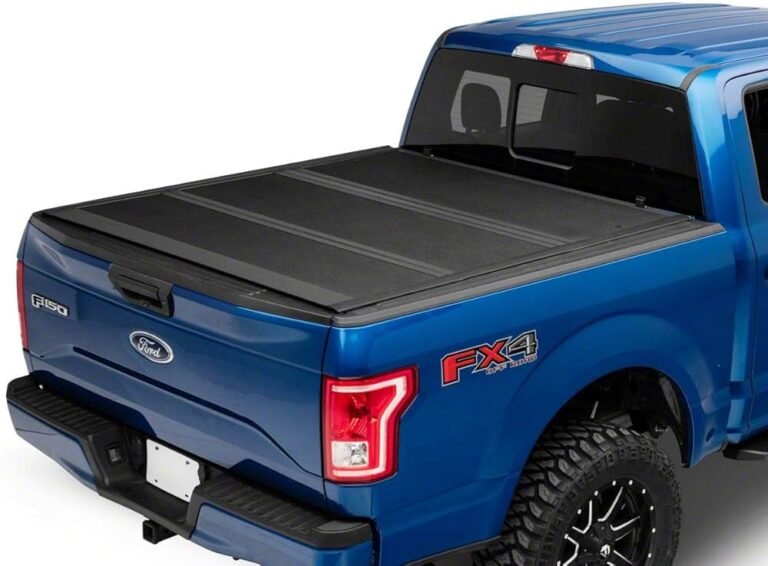
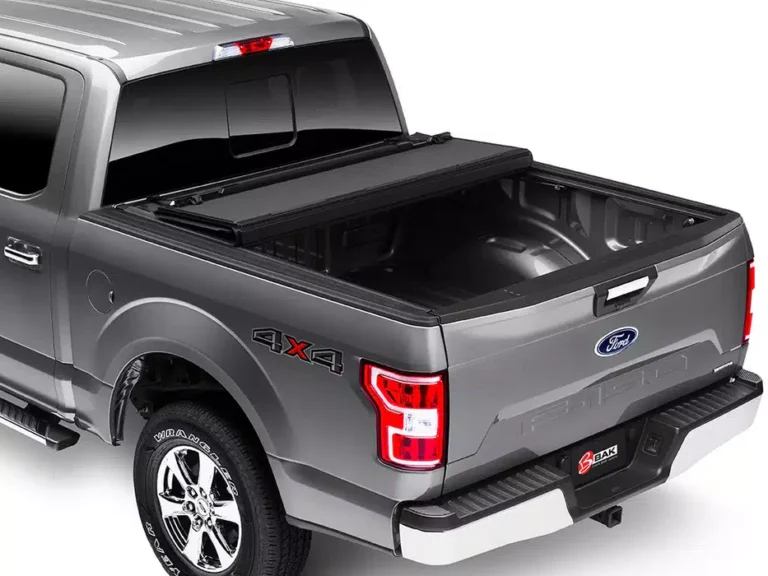
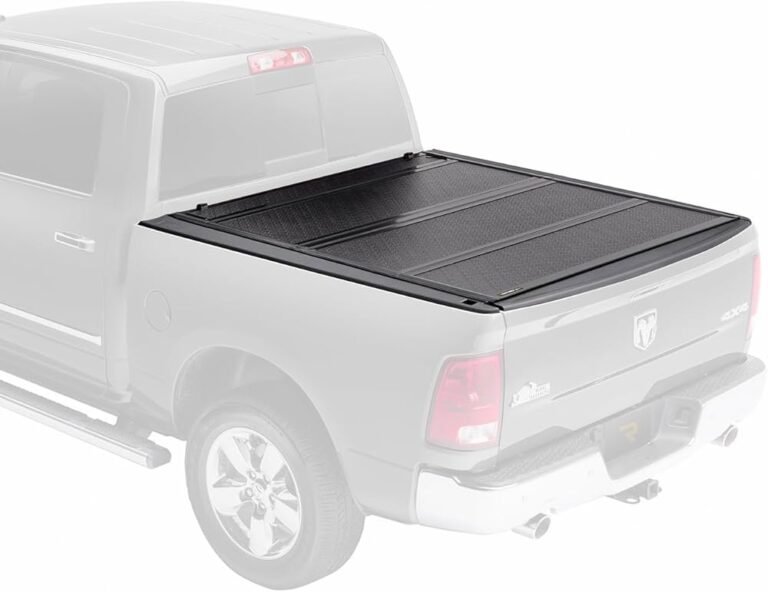
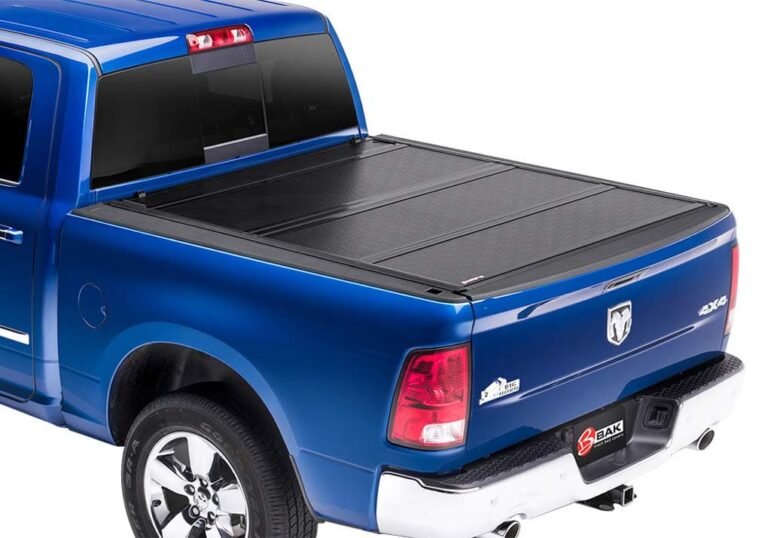
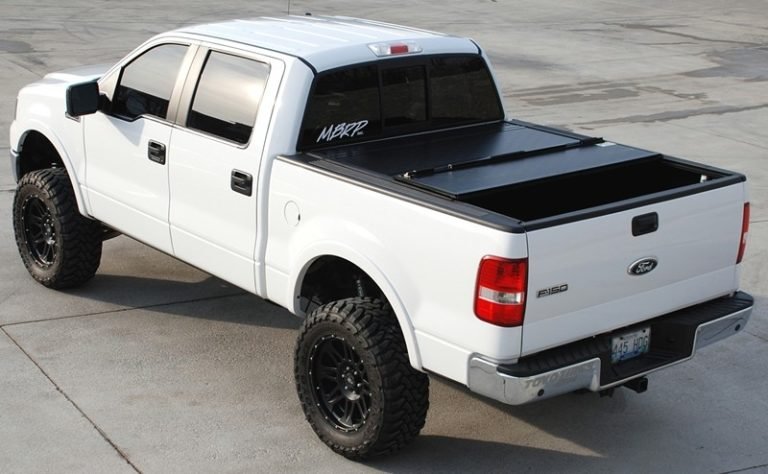
BAKFlip FiberMax Hard Folding Tonneau Cover
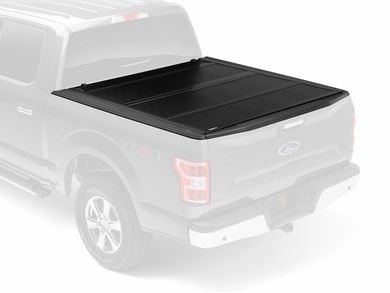
BAK Industries BAKFlip FiberMax Tri-Fold Tonneau Cover
The BAKFlip FiberMax combines fiberglass panel construction with BAK’s proven tri-fold design for maximum durability and weather protection. Each panel features composite fiberglass construction with UV-resistant gel coat finish that withstands years of sun exposure without fading or chalking. Weighs 15% less than steel alternatives while providing superior dent resistance. Folds completely against the cab or opens partially for oversized cargo. Compatible with Ford F-150, Chevy Silverado 1500, RAM 1500, Toyota Tundra, and GMC Sierra bed lengths from 5.5 to 8 feet.
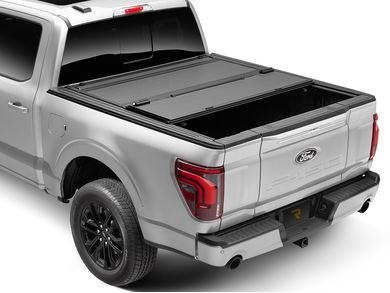
BAKFlip FiberMax vs MX4 Construction Comparison
The bakflip fibermax vs mx4 debate centers on material advantages—fiberglass versus aluminum construction. The FiberMax features composite fiberglass panels with gel coat finish that resists scratches, chips, and UV damage better than painted aluminum. However, the MX4’s aluminum construction provides superior impact resistance and easier repair if damaged. Both models use identical hinge systems and hardware, maintaining BAK’s reputation for smooth folding operation and weatherproof sealing. Weight difference is minimal—FiberMax panels weigh 2-3 pounds less per panel.
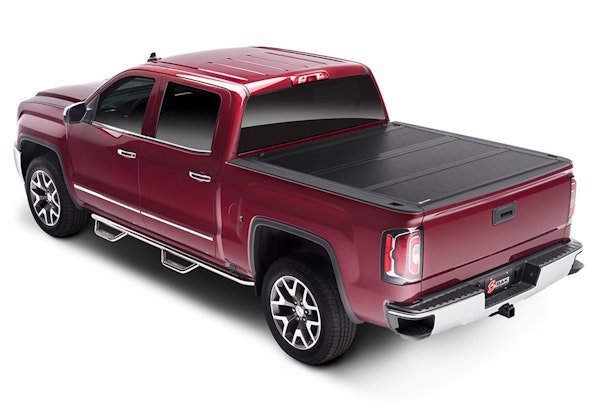
BAKFlip FiberMax Hard Folding Cover Performance
This bakflip fibermax hard folding cover delivers exceptional cargo protection through triple-seal weather barriers and reinforced latch mechanisms. Fiberglass construction maintains structural integrity through temperature extremes from -40°F to 160°F without warping or cracking. The smooth gel coat surface sheds snow and ice more effectively than textured aluminum finishes. Automatic latching system secures all three panels simultaneously with spring-loaded buckles. Maximum weight capacity of 400 pounds evenly distributed supports equipment storage and recreational loads safely.
Why Choose BAKFlip FiberMax Over Aluminum Models
The BAKFlip FiberMax represents BAK Industries’ premium fiberglass offering in a market dominated by aluminum tonneau covers. While aluminum models like the MX4 and G2 deliver proven performance, the FiberMax addresses specific limitations that fiberglass construction solves elegantly. Understanding these advantages helps truck owners make informed decisions between material options.
Fiberglass panels resist surface damage that plagues painted aluminum covers. Aluminum panels show every scratch, scuff, and ding from cargo loading and highway debris. The FiberMax gel coat finish maintains its appearance through years of abuse that would leave aluminum covers looking worn and damaged. Minor scratches in gel coat often polish out completely—something impossible with damaged paint.
Temperature stability gives fiberglass a significant advantage in extreme climates. Aluminum expands and contracts dramatically with temperature changes, potentially affecting seal compression and panel alignment. The BAKFlip FiberMax tonneau cover maintains consistent dimensions through temperature swings, ensuring reliable weather sealing year-round. This stability proves particularly valuable in regions experiencing wide seasonal temperature variations.
Fiberglass Construction Benefits
The composite fiberglass construction used in the bak industries bakflip fibermax tri fold tonneau cover delivers multiple performance advantages over traditional aluminum or steel alternatives. Fiberglass naturally dampens sound transmission, reducing road noise in the cab compared to metal covers that can amplify highway sounds.
UV resistance is another key advantage. While painted aluminum fades and chalks over time, the gel coat finish on FiberMax panels maintains color consistency and gloss retention through decades of sun exposure. This finish doesn’t require waxing or protective treatments—periodic washing maintains like-new appearance indefinitely.
Weight reduction without strength compromise makes fiberglass attractive for fuel economy and handling. Each FiberMax panel weighs 2-3 pounds less than equivalent aluminum panels while providing superior flexural strength. This weight savings adds up across three panels and reduces the cover’s impact on truck payload capacity.
Surface Finish and Appearance
The gel coat finish on BAKFlip FiberMax panels provides depth and richness that painted aluminum can’t match. The finish has inherent UV stabilizers mixed throughout rather than applied as surface coatings that can wear away. This construction method ensures long-term color stability and gloss retention.
Surface smoothness of gel coat finishes sheds dirt, snow, and ice more effectively than textured aluminum surfaces. Water beads and runs off cleanly, reducing water spotting and mineral deposits. The non-porous surface resists staining from tree sap, bird droppings, and industrial fallout that can permanently mark porous aluminum finishes.
Color matching options with truck paint schemes work well with fiberglass construction. The gel coat accepts custom tinting during manufacturing for exact color matches that remain consistent over time. Painted aluminum covers often show slight color variations from factory paint that become more pronounced as both surfaces age differently.
BAKFlip FiberMax Installation and Compatibility
Installing the BAKFlip FiberMax follows identical procedures to other BAK tri-fold models, using the same rail system and hardware components. This standardization means existing BAKFlip owners can upgrade to FiberMax construction without learning new installation techniques or purchasing different tools.
The clamp-on rail system requires no drilling on most truck applications. Rails attach to bed sides using heavy-duty clamps with protective rubber cushions preventing paint damage. Installation typically takes 45-60 minutes for first-time installers following included instructions. Experienced installers complete the job in 30 minutes or less.
Truck compatibility spans all major pickup manufacturers and bed lengths. The FiberMax fits Ford F-150, Chevrolet Silverado 1500, GMC Sierra 1500, RAM 1500, Toyota Tundra, and Nissan Titan models with 5.5-foot, 6.5-foot, and 8-foot bed configurations. Each application uses truck-specific rails ensuring proper fit and seal compression.
Hardware and Rail System
The rail system supporting BAKFlip FiberMax panels uses extruded aluminum construction with integrated drainage channels and seal mounting surfaces. These rails distribute panel weight evenly across bed rails and provide rigid mounting points for hinge hardware. Drainage channels direct water away from cargo areas rather than allowing pooling.
Clamp assemblies use stainless steel hardware with corrosion-resistant coatings for long-term durability. Torque specifications ensure proper clamping force without over-tightening that could damage bed rails or paint finishes. Rubber cushion strips between clamps and bed rails prevent metal-to-metal contact and paint wear.
Hinge hardware matches other BAKFlip models, allowing component interchange for repairs or upgrades. Springs, bushings, and pivot hardware are readily available and install with basic hand tools. This parts commonality reduces long-term ownership costs and ensures repair parts remain available.
Bed Liner and Accessory Compatibility
The BAKFlip FiberMax hard folding cover works with most spray-in and drop-in bed liner systems without modification. Rail clamps accommodate varying bed rail thicknesses from different liner applications. However, some thick spray-in liners may require longer clamp bolts available through BAK Industries.
Toolbox compatibility depends on specific toolbox designs and mounting methods. Low-profile boxes that mount inside bed rails typically work fine with proper clearance planning. Boxes that mount on bed rails may interfere with cover rails and require custom mounting solutions or alternative tonneau cover designs.
Stake pocket covers and tie-down accessories remain accessible with the FiberMax installed. The rail system positions covers above most bed-mounted accessories while maintaining clean appearance and functionality. Professional installation helps address compatibility concerns with complex accessory combinations.
Weather Protection and Security Features
Weather sealing in the BAKFlip FiberMax system relies on multiple seal barriers working together to prevent water intrusion. The primary perimeter seal compresses between panels and rails when closed, creating a weatherproof barrier around the entire bed opening. Secondary seals between panel joints prevent water intrusion during partial opening configurations.
The fiberglass construction naturally sheds water more effectively than aluminum surfaces. The smooth gel coat finish doesn’t have microscopic texture that can hold water or allow capillary action to draw moisture under seals. Water beads and runs off cleanly, reducing the potential for leak development over time.
Drainage system design incorporates channels in the rail system that direct any water intrusion away from cargo areas. These channels connect to drain tubes that route water outside the bed rather than allowing pooling that could damage cargo or promote corrosion. Regular cleaning of drain channels maintains this protection.
Security and Locking Systems
The BAKFlip FiberMax tonneau cover includes automatic latching systems that secure all panels simultaneously when closed. Spring-loaded buckles engage automatically without requiring manual locking procedures. This convenience ensures consistent security even when closing the cover quickly.
Latch mechanisms resist tampering and provide deterrent value against casual theft attempts. While not equivalent to hard shell security, the sturdy construction and smooth exterior provide limited access points for prying or cutting attempts. Integrated latches don’t protrude externally where they could be easily defeated.
For enhanced security, the FiberMax accepts aftermarket locking systems that secure panels to rails with keyed locks. These systems work with existing latch hardware while adding positive locking that requires key access for opening. This upgrade proves valuable for commercial applications or high-theft areas.
Cargo Protection Performance
Cargo protection extends beyond weather sealing to include impact resistance and load capacity. The fiberglass panel construction provides excellent impact resistance against hail, falling branches, and highway debris. The composite construction absorbs impact energy without permanent deformation that could affect sealing or operation.
Load capacity of 400 pounds evenly distributed allows secure transport of equipment, coolers, and recreational gear. The tri-fold design distributes weight across all three panels and their supporting hinges rather than concentrating loads on single points. Proper load distribution prevents panel damage and maintains structural integrity.
UV protection for cargo proves particularly valuable for electronics, upholstery, and other sun-sensitive items. The opaque fiberglass panels block 100% of UV transmission while the weatherproof sealing prevents moisture damage. This protection maintains cargo value and prevents degradation during transport or storage.
BAKFlip FiberMax vs Aluminum Model Comparison
Comparing the bakflip fibermax vs mx4 highlights key differences between fiberglass and aluminum construction philosophies. Both models use identical hardware, hinges, and rail systems—the primary difference lies in panel materials and their resulting performance characteristics.
The MX4’s aluminum construction provides superior impact resistance and easier field repair if damage occurs. Aluminum panels can be straightened, reformed, or patched more easily than damaged fiberglass. However, aluminum shows surface damage more readily and requires paint maintenance to prevent corrosion.
FiberMax excels in appearance retention and weather resistance. The gel coat finish maintains like-new appearance through years of exposure while aluminum paint systems fade, chalk, and show wear. Temperature stability of fiberglass also provides more consistent seal performance through seasonal temperature variations.
Cost and Value Analysis
Initial purchase price between FiberMax and aluminum models varies by $100-200, with fiberglass commanding the premium. This price difference reflects manufacturing complexity and material costs. However, long-term value considerations favor fiberglass for appearance retention and reduced maintenance requirements.
Maintenance costs differ significantly over ownership periods exceeding five years. Aluminum covers may require paint touch-ups, surface repairs, and protective treatments that fiberglass gel coat eliminates. The gel coat’s inherent UV resistance and non-porous surface reduce ongoing care requirements and associated costs.
Resale value considerations favor fiberglass construction for appearance retention. A five-year-old FiberMax cover looks nearly identical to new while aluminum covers show inevitable wear signs. This difference becomes significant for truck owners who change vehicles frequently or want maximum return on accessory investments.
Performance in Extreme Conditions
Desert climates with intense UV exposure and extreme temperatures highlight FiberMax advantages over painted aluminum. The gel coat finish resists fading and maintains structural integrity through temperature cycles exceeding 150°F. Aluminum covers in these conditions often show paint failure and thermal expansion issues.
Cold climate performance favors fiberglass stability during rapid temperature changes. Aluminum expands and contracts significantly with temperature variations, potentially affecting seal compression and panel alignment. Fiberglass maintains dimensional stability through temperature swings that would stress aluminum construction.
Coastal environments with salt exposure benefit from fiberglass construction’s corrosion resistance. While aluminum requires protective coatings and regular maintenance in marine environments, fiberglass naturally resists salt corrosion without additional treatments. The gel coat provides an impervious barrier against salt spray and humidity.
Installation Guide and Tips
Installing the bak industries bakflip fibermax tri fold tonneau cover requires careful attention to rail alignment and seal positioning for optimal performance. Begin by thoroughly cleaning bed rails and removing any debris or old adhesive that could interfere with proper seating.
Rail installation starts at the front of the bed near the bulkhead. Position rails parallel to bed sides and ensure consistent height above bed floor. Use provided spacer blocks to maintain proper spacing throughout the installation process. Clamps should distribute pressure evenly without over-tightening that could damage bed rails.
Panel installation requires two people for safety and proper alignment. The fiberglass panels, while lighter than aluminum alternatives, still require careful handling to prevent damage. Support panels adequately during hinge attachment and avoid point loads that could crack fiberglass construction.
Common Installation Mistakes
Over-tightening clamp hardware represents the most common installation error that leads to performance problems. Excessive clamping force can distort rails, compress seals improperly, and even crack bed rail caps on some trucks. Follow torque specifications exactly and check tightness periodically during the first month of use.
Misaligned rails cause operational problems and premature wear. Rails must run parallel to truck centerline and maintain consistent height above bed floor. Even small alignment errors create binding during folding operations and uneven seal compression. Measure multiple points during installation to verify alignment before final tightening.
Inadequate surface preparation compromises seal adhesion and weather protection. Bed rails must be completely clean and free of wax, dirt, or corrosion. Some installations benefit from light sanding to improve seal adhesion on painted surfaces. Clean all surfaces with isopropyl alcohol before applying seals.
Professional vs DIY Installation
DIY installation saves $150-250 in labor costs but requires proper tools, workspace, and mechanical aptitude. The BAKFlip FiberMax includes detailed instructions with illustrations, but successful installation depends on following procedures exactly. Mistakes during installation can void warranty coverage and create expensive problems.
Professional installation through authorized BAK dealers provides expertise, proper tools, and warranty coverage for installation quality. Professionals complete installations in 30-45 minutes versus 60-90 minutes for DIY attempts. They also address compatibility issues and make adjustments that inexperienced installers might miss.
Consider professional installation when complex accessory combinations exist or if you lack experience with truck modifications. The cost difference becomes minimal when factoring in potential mistakes, rework, and warranty implications. Professional installation also provides a service relationship for future maintenance and repairs.
Maintenance and Long-Term Care
Maintaining the BAKFlip FiberMax requires different procedures than aluminum covers due to fiberglass construction characteristics. The gel coat finish needs specific care products and techniques to maintain appearance and performance over years of use.
Regular washing with mild automotive soap removes dirt and environmental contaminants before they can cause staining or surface damage. Avoid abrasive cleaners or brushes that could scratch the gel coat surface. Use soft microfiber cloths or wash mitts for safe cleaning without surface damage.
Quarterly inspection of seals, hinges, and latch mechanisms catches problems before they become expensive failures. Look for seal compression loss, hinge wear, or latch operation changes that indicate maintenance needs. Address problems early to prevent water intrusion or operational failures.
Gel Coat Care and Protection
The gel coat finish on FiberMax panels benefits from periodic polishing with marine-grade compounds designed for fiberglass. These products restore gloss and provide UV protection beyond the inherent stabilizers in the gel coat. Apply polish 2-3 times annually or when surface appears dull.
Minor scratches in gel coat often polish out completely using appropriate compounds and techniques. Start with fine polishing compound and progress to coarser grades only if necessary. Deep scratches that penetrate through gel coat may require professional repair to prevent water intrusion into panel cores.
Waxing isn’t necessary for gel coat protection but can provide additional gloss and water beading. Use marine waxes designed for fiberglass rather than automotive products that may contain abrasives or chemicals unsuitable for gel coat finishes. Apply thin, even coats for best results.
Seasonal Maintenance Schedule
Spring maintenance focuses on cleaning winter salt and debris that could cause long-term damage. Inspect drainage channels for blockages from leaves or road debris. Test all latch mechanisms and lubricate hinges with appropriate lubricants. Check seal condition after freeze-thaw cycles.
Summer preparation includes thorough cleaning and polishing before intense UV exposure begins. Apply fresh polish or protective coatings to gel coat surfaces. Verify weatherproof sealing before rainy seasons. Test operation through full folding cycles to ensure smooth performance.
Fall preparation involves cleaning accumulated road tar, tree sap, and other contaminants that could stain gel coat surfaces over winter. Lubricate all moving parts before cold weather affects metal components. Check clamp tightness that may have changed due to thermal expansion cycles.
Warranty Coverage and Support
The BAKFlip FiberMax includes BAK Industries’ comprehensive 5-year limited warranty covering defects in materials and workmanship. This warranty spans panel construction, hardware components, and operational mechanisms when used under normal conditions.
Fiberglass panel warranty covers gel coat defects, delamination, and structural failures from manufacturing problems. Normal wear, impact damage, and UV fading beyond specified limits aren’t covered. The gel coat warranty specifically addresses color stability and surface integrity over the coverage period.
Hardware warranty matches other BAKFlip models, covering rails, hinges, latches, and mounting components. Corrosion resistance and operational performance receive full coverage when proper maintenance procedures are followed. Commercial use applications may have different warranty terms requiring verification.
Warranty Claim Procedures
Warranty claims require proof of purchase and detailed documentation of problems encountered. BAK Industries customer service evaluates claims based on photos, usage descriptions, and failure analysis. Approved claims receive replacement parts shipped at no charge.
Installation-related problems may void warranty coverage if improper procedures caused failures. Following installation instructions exactly and using specified torque values protects warranty coverage. Professional installation provides additional protection against installation-related warranty denial.
Aftermarket modifications or repairs using non-OEM parts automatically void warranty coverage. All components must remain genuine BAK Industries parts for warranty validity. Keep records of any service or repairs performed for warranty documentation requirements.
Frequently Asked Questions
How does the BAKFlip FiberMax compare to aluminum models?
The BAKFlip FiberMax offers superior UV resistance and appearance retention compared to aluminum models like the MX4. Fiberglass gel coat maintains color and gloss longer than painted aluminum finishes. However, aluminum provides better impact resistance and easier repair if damage occurs. Weight differences are minimal between materials.
Can I install the FiberMax myself or do I need professional installation?
DIY installation is possible with basic mechanical skills and proper tools. The FiberMax uses identical hardware to other BAKFlip models with detailed instructions included. However, fiberglass panels require more careful handling than aluminum to prevent damage. Professional installation provides warranty protection and ensures optimal performance.
What maintenance does the gel coat finish require?
Gel coat maintenance involves regular washing with mild soap and periodic polishing with marine-grade compounds. Avoid abrasive cleaners that could scratch the surface. Polish 2-3 times annually to maintain gloss and UV protection. Minor scratches often polish out completely with appropriate compounds.
Is the FiberMax compatible with bed liners and toolboxes?
The FiberMax works with most bed liner systems and maintains compatibility with low-profile toolboxes that mount inside bed rails. Some thick spray-in liners may require longer mounting bolts. Toolboxes that mount on bed rails may interfere with cover rails and require alternative mounting solutions.
How much weight can the FiberMax support?
Maximum weight capacity is 400 pounds evenly distributed across all three panels. This capacity supports equipment storage and recreational gear transport safely. Proper load distribution prevents panel damage and maintains structural integrity. Avoid point loads that could crack fiberglass construction.
What trucks are compatible with the BAKFlip FiberMax?
The FiberMax fits all major pickup trucks including Ford F-150, Chevrolet Silverado 1500, GMC Sierra 1500, RAM 1500, Toyota Tundra, and Nissan Titan. Available for 5.5-foot, 6.5-foot, and 8-foot bed lengths. Each application uses truck-specific rails ensuring proper fit and seal compression.
How long does the warranty coverage last?
BAK Industries provides a 5-year limited warranty covering defects in materials and workmanship. This includes gel coat stability, panel construction, and hardware components. Normal wear, impact damage, and improper installation aren’t covered. Professional installation helps protect warranty coverage.
Can I use aftermarket parts for repairs?
Using aftermarket or non-OEM parts voids warranty coverage completely. All components must be genuine BAK Industries parts to maintain warranty validity. Aftermarket parts may not fit properly or provide adequate performance, potentially causing expensive damage to other components.